Run your co-packed brand from one deck.
Built first with craft breweries. Designed for the next generation of independent beverage brands.
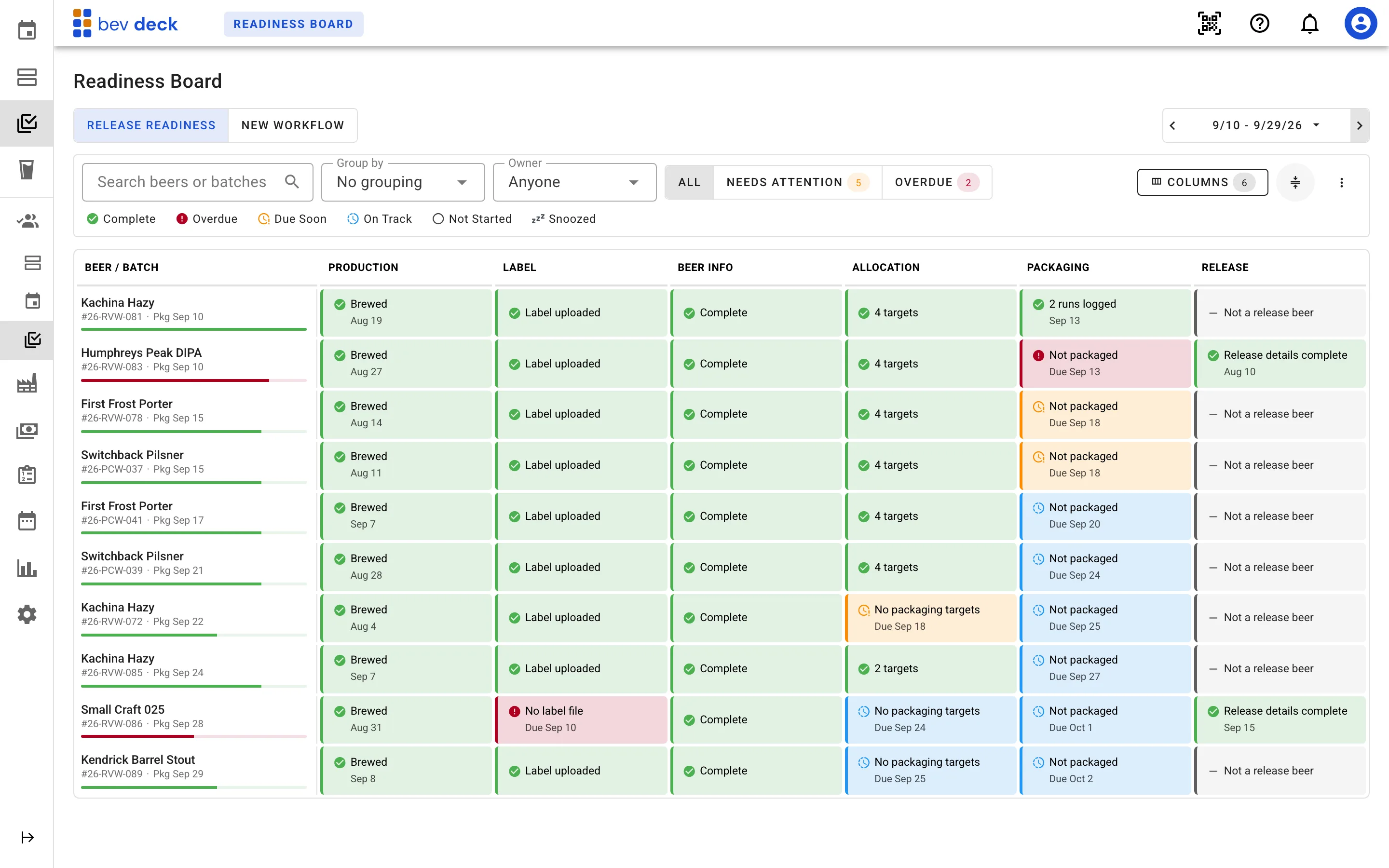
One system, however and wherever you produce, store and sell.
Most systems assume one building and leave you improvising for the second. Bev Deck is built for multi-facility at its foundation. Every site is its own record, configured for what it does and does not do.
| Site | Production | Inventory | Taproom |
|---|---|---|---|
| Co-packerThird-party contract facility | Production: yes | Inventory: yes | Taproom: no |
| Your own siteCompany owned | Production: yes | Inventory: yes | Taproom: yes |
| Your 2nd taproomCompany owned | Production: no | Inventory: yes | Taproom: yes |
| Overflow warehouseThird-party storage (3PL) | Production: no | Inventory: yes | Taproom: no |
| Your wholesalersWholesaler on hand stock and depletions feed — optional module | Production: no | Inventory: visible, not yours | Taproom: no |
Most operations land in one of three shapes. Find the one that looks like yours.
You don’t own a building
Production runs at a co-packer and stock sits at a 3PL. You own the brand and the inventory; you do not own a building.
See how it worksYou own one, partners cover the rest
You make part of the range in your own facility, a contract brewer covers the rest, and a 3PL holds what will not fit. Both halves land in the same inventory.
See how it worksYou own several
Several production facilities of your own with complex internal logistics. Bev Deck handles it all with no workarounds needed.
See why it fitsThe full breadth of operations, anywhere they happen.
Schedule the work
One calendar across every site, including the runs happening at a plant you do not own.
Run production
Production batches carry the site they ran at — your own cellar or a contract facility’s — and what gets packaged lands in the same finished goods either way.
Know the stock
Finished goods by lot and date code, counted wherever they sit: your own warehouse, a taproom cooler, or a third-party warehouse two states away.
Sell and ship
Orders allocate against real lots, the bill of lading rides with the truck, and the invoice still agrees with the order when it reaches QuickBooks.
Report and file
Production, inventory movements and sales answer on the same axis — per site when a return needs it, and whole-business when you do.
Most teams get here by outgrowing something.
For some that is spreadsheets: production plans in one, orders in a shared doc, inventory in a third, and accounting in QuickBooks. For others it is a system that did the job for years and now takes a spreadsheet beside it to stay true.
QuickBooks stays your accounting system. Bev Deck runs the work in front of it, so sales, inventory, production, and reporting are all reading the same numbers.
Connect the tools your team already uses.
Bev Deck brings beverage operations closer to accounting, team communication, and taproom reporting.
QuickBooks
Create invoices from operational sales activity and sync them when your team is ready.
Slack
Send workflow reminders, task notifications, and operational updates where the team already works.
Square
Connect taproom POS activity to inventory and reporting when retail operations are part of the business.
Ready to run everything from one deck?
Start a free trial, or see how Bev Deck carries the work from plan to payment.